Transitions FAQs
Last updated on October 20, 2026
Recently Added FAQ
Learners completed an accredited program, such as the University of Saskatchewan's MPAcc program or the University of Alberta’s MAcc program, may transition to the new program if their program time limit is after December 31, 2028.
Accredited programs will continue to be recognized in the new program, subject to regional accreditation processes.
The CPA preparatory courses will be offered until late 2027. There will be 4 exam offerings in 2027: March, June, September, and December. The last date to register for a course or exam is November 4, 2027. There will be no rewrites available after the last exam sitting.
Program
Canada’s CPA certification pathway is moving from the current program (CPA Certification Program) to the new program (CPA Professional Program). Current candidates may be able to transition depending on eligibility.
The transition period is January 1, 2027 to December 31, 2028. Eligible candidates may apply to transition during this window. More information on ‘how to apply for transition’ will be shared later this year.
No. Not all candidates will be eligible to transition and some may choose not to transition.
Transition is not automatic; all eligible candidates must apply to transition. Candidates who are not eligible to transition will remain in the current program and must complete their requirements under the current program rules.
Eligibility to transition is based on your program time limit:
- If your time limit ends after December 31, 2028, you may be eligible to transition (subject to other requirements).
- If your time limit ends before December 31, 2028, you are not eligible to transition and must complete the current program within your existing time limit. For the purpose of transition eligibility, the practical experience completion deadline is the date used to determine whether your time limit ends before or after December 31, 2028.
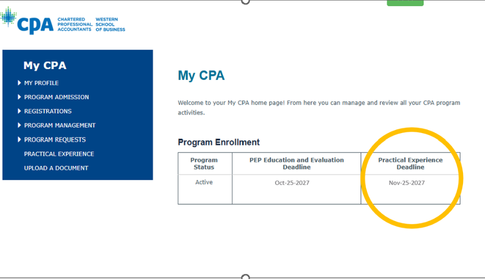
Yes. Candidates must also meet standard administrative requirements, including: being active and in good standing, re-enrolled for the academic year, no outstanding fees, PERT up to date and reviewed, good character requirements met, no outstanding penalties, and training contract compliance. See Transition Policies.
No, transition is not automatic. Eligible candidates must submit a Transition Application, and transition is confirmed only after review and approval by the provincial CPA body. More information on ‘how to apply for transition’ will be shared later this year.
Not necessarily. If you are close to completing the current program and have a viable path to finish using available offerings, we generally encourage you to stay and complete the current program.
If you choose not to transition, you may remain in the current program only if you still have a viable path to complete your remaining requirements through available offerings. If required offerings are no longer available, you may need to consider other options (including withdrawal and later applying under the new program rules).
You must complete all remaining requirements under the current program within your existing time limit, subject to the availability of remaining offerings. Review the final offering schedule and plan your remaining modules/exams accordingly.
Final offering information will be posted and updated on the CPAWSB website. Candidates should review these dates carefully and plan early, particularly if they may need to make a repeat attempt or take a brief pause.
Your placement will be based on what you have already completed in the current program (modules/exams and CFE status), and practical experience recognized to date (including intended licensure path, where applicable). Placement is confirmed when your transition is approved.
Yes. In the new program, learners will have three attempts per module and per exam, regardless of prior attempts in the current program, if their time limit allows.
Candidates who transition may receive up to two (2) additional years to complete outstanding requirements in the new program. This is not automatic and will be assessed individually—not everyone will receive the full two years. See Transition Policies.
Yes. Program time limits apply to the completion of all requirements (education, examinations, and practical experience) of the new program.
Experience already reviewed/approved may be considered for recognition in the new program, subject to currency and standards. Candidates should ensure PERT reporting is up to date and connect with their provincial body for practical experience questions.
Candidates with documented extenuating circumstances may be reviewed on a case-by-case basis in line with applicable policies. Please contact the School to discuss next steps.
No. Candidates who entered under an international MOU pathway are governed under separate arrangements. MOU candidates are not eligible to transition under the standard transition process at this time, and MOU-specific guidance will be communicated separately.
For transition questions and advising, contact CPA Western School of Business at [email protected].
For practical experience questions, candidates should connect with their provincial CPA body.
No. Candidates who transition to the new program will not be required to pay fees twice for the same requirement. For example, you will not pay for modules or exams from which you are exempt based on what you have already completed in the current program.
If you have already paid annual fees for the academic year in which you transition, those fees will continue to apply and you will not be charged again for that same year. See the new CPA Professional Program fees.
If you are currently enrolled in the current program and are approved to transition during the transition period, you will not be required to reapply or meet the new program entrance requirements again. Your eligibility to transition is based on meeting the transition eligibility criteria (including time limit and other administrative requirements).